Teeth Whitening
Clinic-grade treatment designed for your teeth, not an off-the-shelf kit. Noticeably lighter in a single appointment.
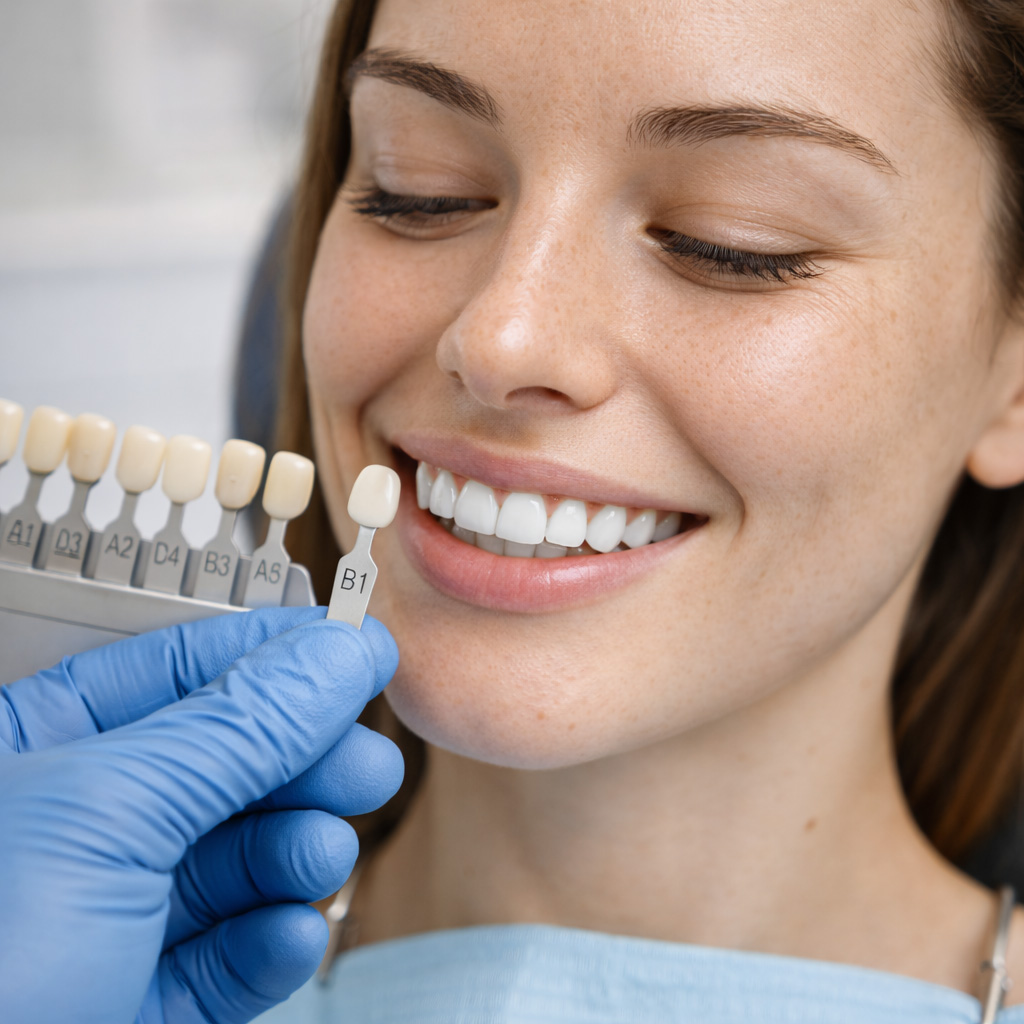
Professional whitening that actually works.
How professional whitening works
Over-the-counter whitening products use a low concentration of bleaching agent on the tooth surface — the concentration has to be low enough to be safe without professional supervision, and the results are limited as a result. In-clinic whitening uses a significantly stronger agent, applied carefully under a barrier that protects the surrounding gum tissue. The active ingredient (hydrogen peroxide or carbamide peroxide) breaks down stains within the enamel and dentine itself, not only on the surface. The result after a single 60–90 minute session is a level of lightening that take-home strips cannot achieve.
When whitening is the right answer
Whitening is most effective on teeth that have darkened with age, coffee, tea, red wine, or smoking. Some discolouration is intrinsic — caused by tetracycline staining, fluorosis, or trauma — and responds poorly to bleaching. Whitening also has no effect on crowns, veneers, or composite fillings; if you have these on visible teeth, the surrounding teeth can be whitened to match, or the restorations adjusted afterwards. Dr. Alberts assesses your teeth before treatment and will tell you if whitening is not the right answer for your situation, and explain what is.
Treatment costs
The cost depends on the treatment needed and the chosen restoration. Each card explains its scope; your dentist confirms the total in your treatment plan before treatment begins.
390–459 €
In-office professional whitening
Professional whitening in the clinic. The dentist agrees the treatment protocol and any preparation needed before treatment.
Whitening that respects enamel
A stronger bleaching agent is not automatically a better one. Used without proper isolation, high-concentration peroxide can cause gum burns, lasting sensitivity, and damage to existing restorations. The procedure here begins with a full assessment of enamel thickness, existing restorations, and any areas of recession or exposed root — all of which change how whitening should be applied. A protective barrier is placed over the gums before the gel is applied. The treatment runs in controlled cycles rather than a single long exposure, with the result checked between cycles against a calibrated shade guide. Sensitivity is managed with a desensitising agent at the end of the appointment and a clear set of post-treatment instructions: which foods and drinks to avoid for 48 hours, and how to maintain the result with a take-home top-up if appropriate.