Gum Treatment
Healthy gums are the foundation of everything else. Periodontitis must be controlled before crowns, implants, or any other restorative work — not treated as an afterthought.
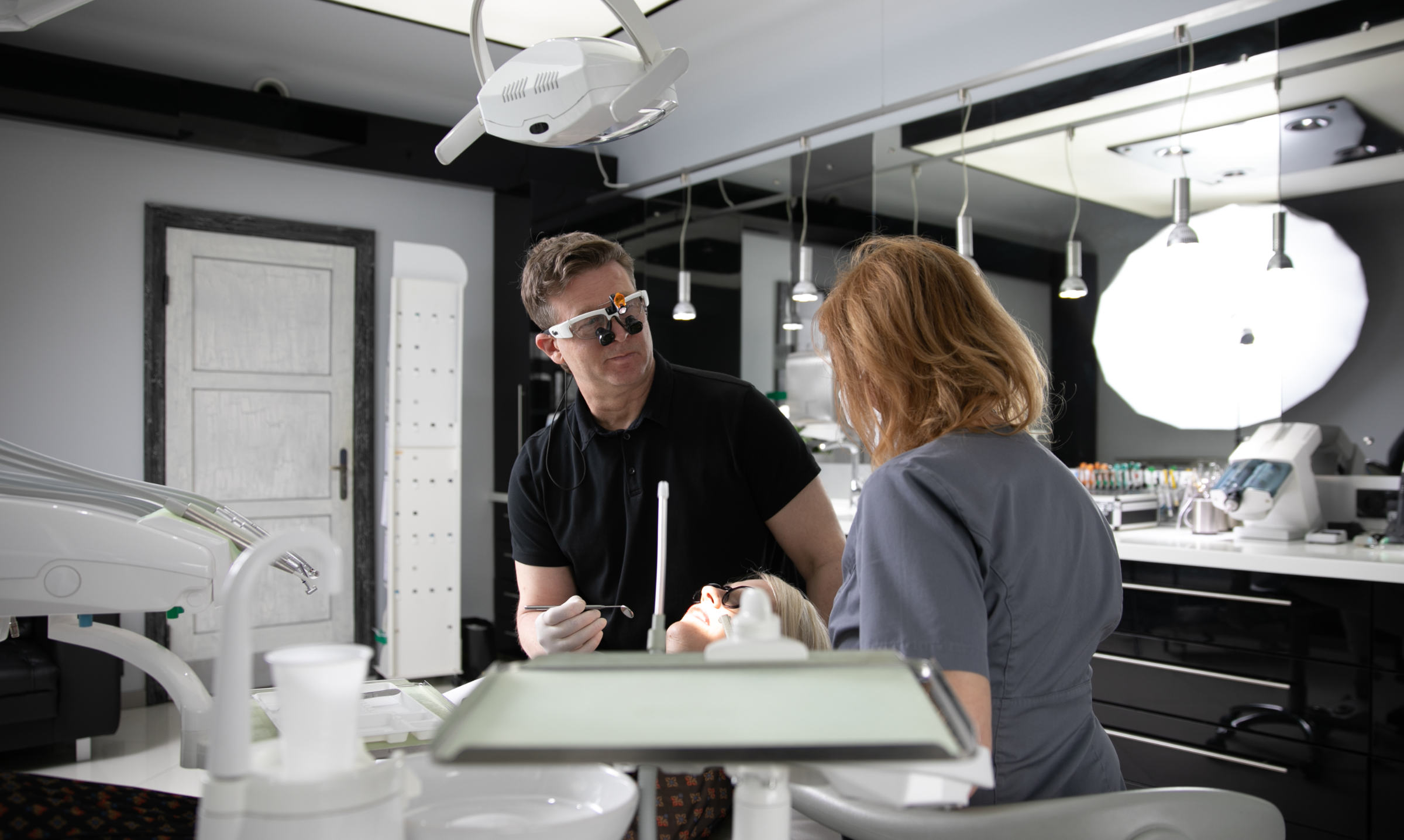
What is periodontitis?
How periodontitis develops
Periodontitis is a bacterial infection of the structures supporting the teeth — the gums, the periodontal ligament, and the jawbone. It begins as gingivitis (gum inflammation) and progresses to permanent bone destruction if untreated. It is one of the most common chronic diseases in adults and one of the most underdiagnosed, because early and moderate stages are usually painless. By the time most patients notice symptoms, significant damage has already occurred. Periodontitis is the leading cause of tooth loss in adults, and untreated gum disease is also associated with cardiovascular disease and diabetes complications.
Why it matters before any other treatment
Implants can fail through the same mechanism as teeth lost to periodontitis — peri-implantitis, a bacterial infection around the implant. Crowns and veneers placed on inflamed gums shrink away from the margin within a few years, leaving exposed roots and dark lines. Periodontitis must be controlled before any restorative work begins — not as a bureaucratic prerequisite, but because building on an active infection is a predictable path to failure. The same is true for cosmetic work: a stable gum line is what makes the result look natural and last.
Stages of gum disease
Gingivitis
Early inflammation of the gums — caused by plaque buildup. Gums bleed when brushing. Reversible with professional cleaning and improved home care.
Early Periodontitis
Infection has begun to affect the bone and tissue supporting the teeth. Pockets form between teeth and gums. Requires professional treatment; can be stabilised.
Advanced Periodontitis
Significant bone loss. Teeth may be mobile. Some teeth may no longer be saveable. Treatment focuses on halting progression and preserving what remains.
How treatment works
01
Step 1
Assessment
Periodontal probing measures pocket depths around each tooth. X-rays assess bone levels. A complete picture of the disease severity and distribution.
02
Step 2
Supragingival cleaning
Removal of plaque and calculus (tartar) from the visible surfaces of the teeth. The hygiene appointment most patients are familiar with.
03
Step 3
Subgingival debridement
The critical step for periodontitis. Instruments — and often ultrasonic scalers — clean below the gumline, removing bacteria and calculus from root surfaces inside the pockets. Done under local anaesthesia for deep pockets.
04
Step 4
Re-evaluation
6–8 weeks after treatment, pocket depths are re-measured. Most cases show significant improvement. Residual deep pockets are assessed for further intervention.
05
Step 5
Maintenance
Periodontitis is chronic — it can be controlled but not cured. Regular maintenance appointments (every 3–6 months) prevent reactivation. This is non-negotiable for long-term success.
Gum treatment pricing
From:
€60
Periodontal assessment
Full-mouth probing, bleeding index, and X-ray review. Written diagnosis with stage and grade, plus a treatment plan.
- Six-point probing on every tooth
- Treatment plan in writing before work begins
- Baseline records kept for future comparison
From:
€60
Supragingival cleaning
Removal of plaque, calculus, and surface stains above the gumline. The standard hygiene appointment, used as the first step in periodontal treatment.
- Ultrasonic and hand instrumentation
- Home-care technique reviewed
- Aftercare interval agreed before you leave
From:
€90
Subgingival debridement — per quadrant
Deep cleaning below the gumline for pockets greater than 4 mm. Performed under local anaesthetic. Priced per quadrant; most cases need 2–4 quadrants.
- Performed under local anaesthetic
- Re-evaluation appointment included at 6–8 weeks
- Maintenance interval set on re-evaluation results
From:
€70
Periodontal maintenance
Ongoing supportive treatment to prevent reactivation. Interval set individually — usually every 3–4 months for stabilised periodontitis.
- Pocket depths re-measured at each visit
- Diagnostic notes shared with your treating dentist
- Required before any planned implant or crown work
All prices shown are approximate starting points. Every treatment is tailored to the individual patient, with the exact cost confirmed in writing before anything begins.
One specialist, one diagnosis

Periodontal assessment is not a quick glance. Pocket depths are probed at six points around every tooth. Bleeding indices are recorded. X-rays are read for bone levels, not just for cavities. The result is a written diagnosis with a stage and a grade — the same framework used in research literature — so that progress can be measured against a baseline rather than guessed at. Treatment is sequenced. Supragingival cleaning first, then subgingival debridement under local anaesthetic where pockets are deep, then a re-evaluation six to eight weeks later to confirm what has actually responded. Maintenance intervals are set on the basis of that re-evaluation, not on a generic schedule. Where periodontitis sits alongside planned implant or restorative work, both treatment plans are written together — not handed off between two clinicians who have never spoken.